Walls and Structural Features & Retaining Walls Charlotte, NC
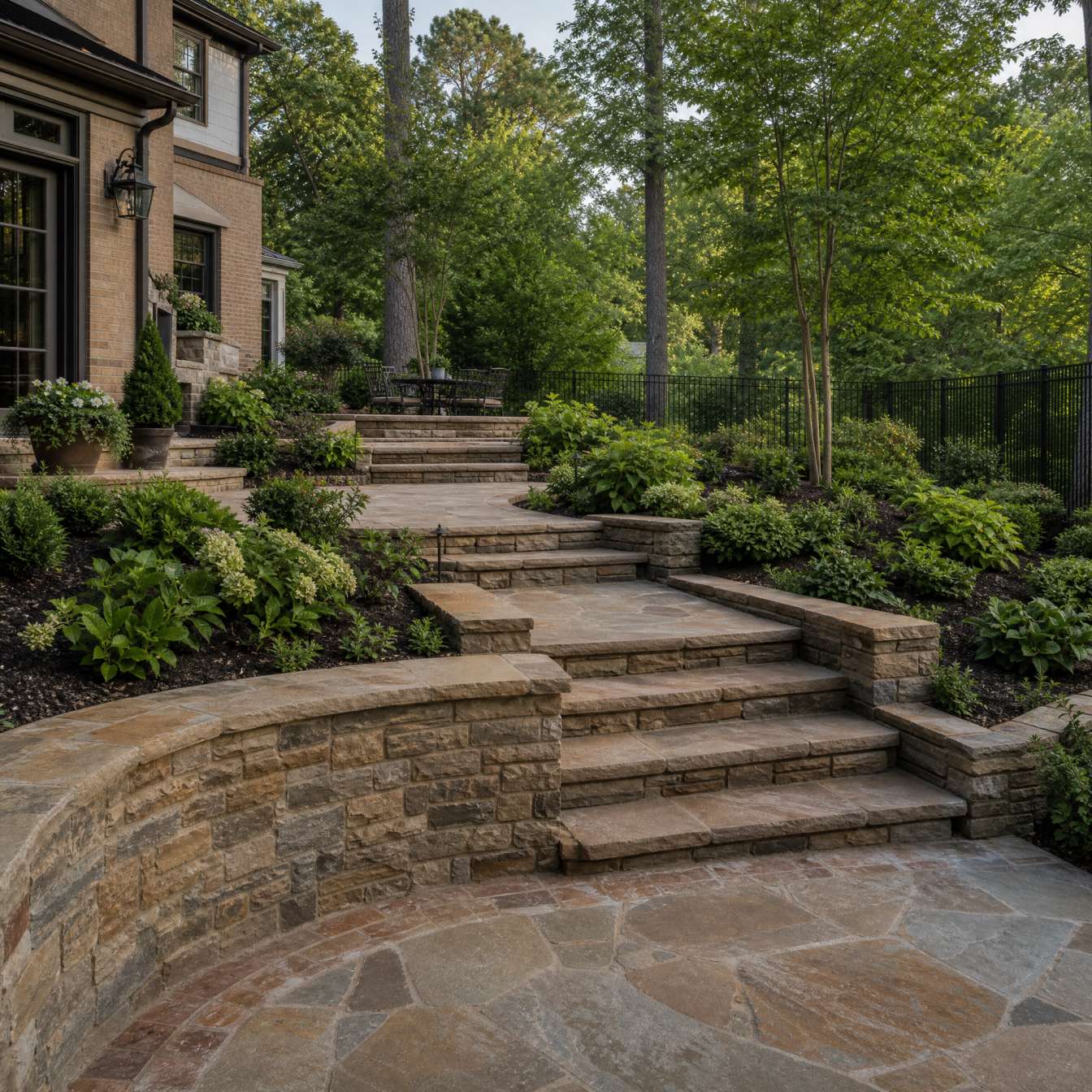
Empresa Galdamez designs and builds retaining walls that manage slope, control soil movement and create usable space on Charlotte properties, along with seating walls and stone or paver steps to complete the outdoor structure.
Tell Us About Your Retaining Wall Project
Share your property's slope, the problem you're trying to solve, and what you'd like the finished space to look like. That gives our team what we need to understand the project and follow up with a clear next step.
Walls & Structural Services for Charlotte Properties
Retaining walls are the core of our structural work. A wall holds soil in place on one side while creating a usable, level surface on the other. Walls can run along a property line, step down a slope in tiers, or wrap around a patio or planting bed. The layout, height and material are planned around your specific site, since a wall for a two-foot grade change is a very different project than one for a steep backyard slope.
Often Planned Alongside a Retaining Wall
Two other structural features are often planned alongside a retaining wall:
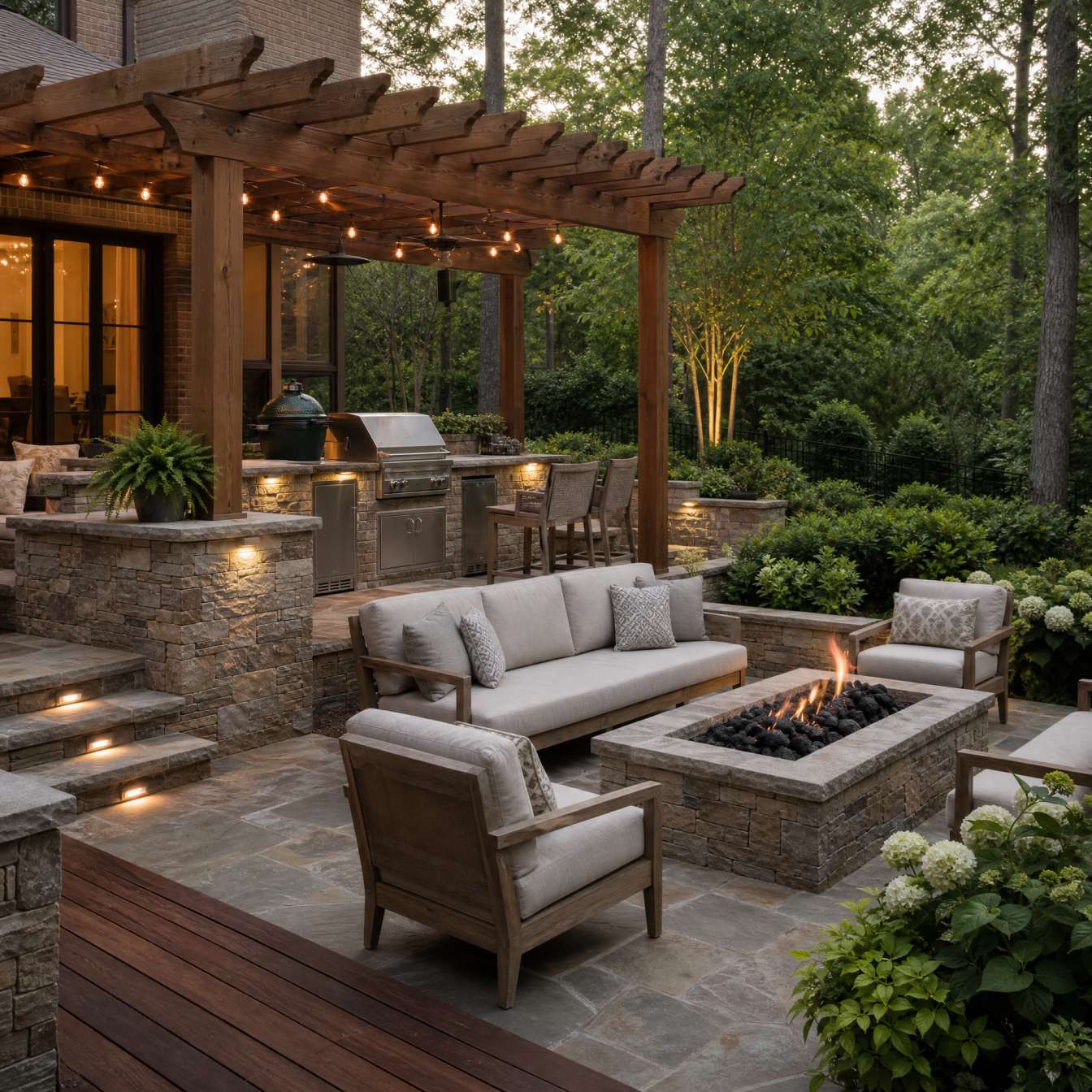
Seating Walls
A shorter wall around a patio, fire pit or gathering space that manages a small grade change while doubling as built-in seating.
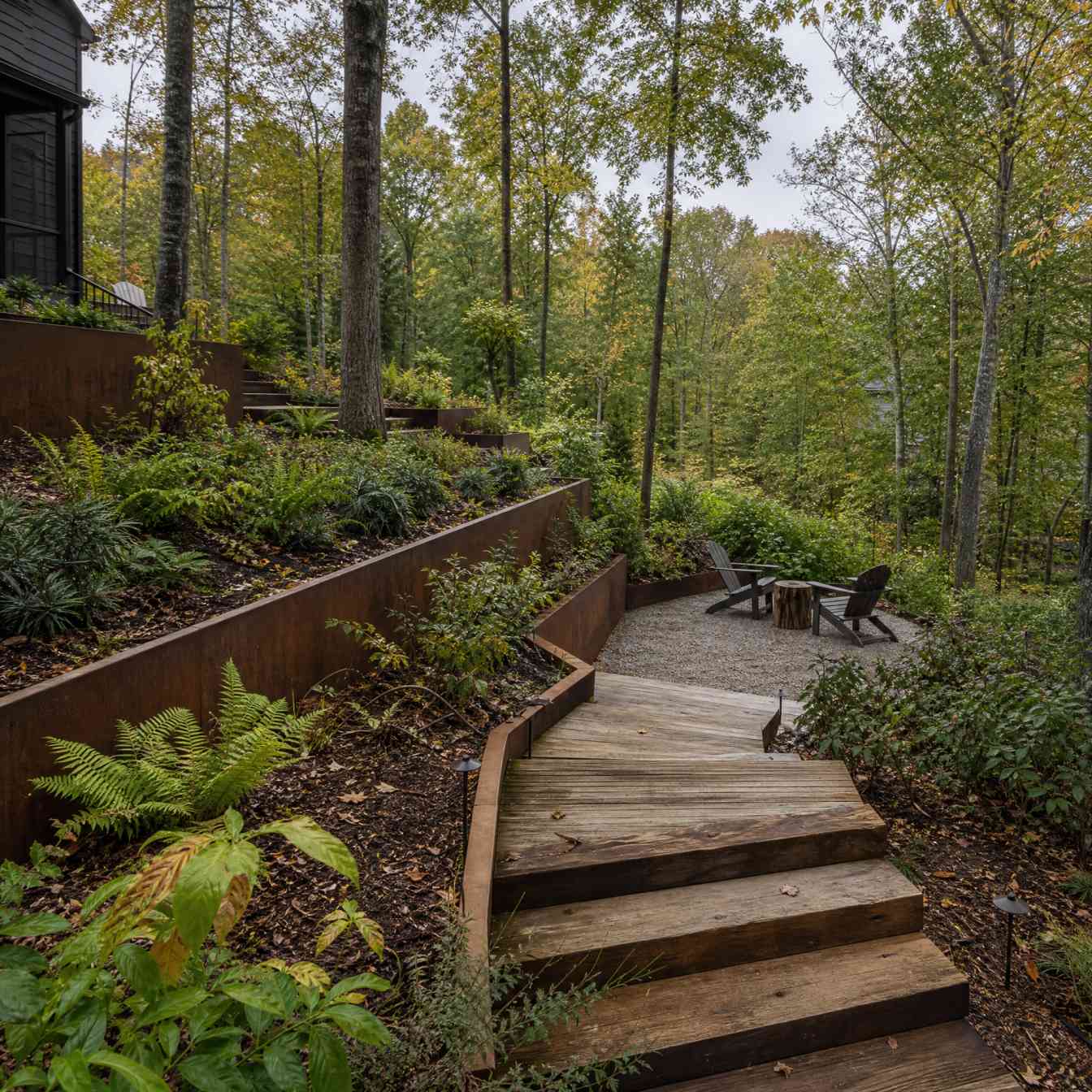
Stone Steps and Paver Steps
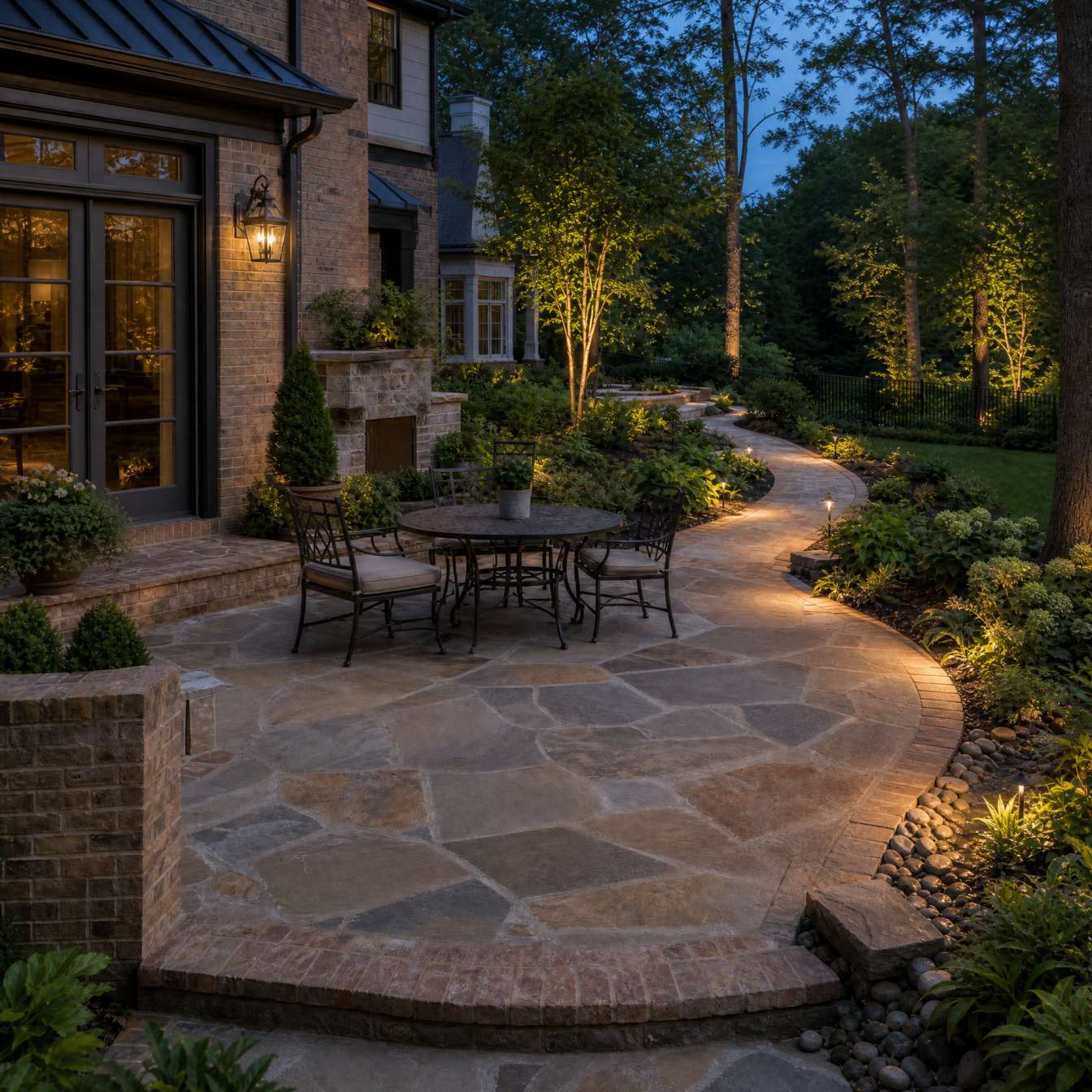
When a wall creates a change in elevation, steps provide safe movement between levels. Paver steps can be matched to a nearby patio, walkway or driveway, while stone steps suit a more natural landscape look.
When Does Your Property Need a Retaining Wall?
A retaining wall manages a change in elevation and holds soil in place where a sloped or uneven landscape would otherwise be difficult to maintain. Common situations include:
- A backyard or side yard with a noticeable slope
- Visible soil movement or erosion, especially after heavy rain
- Wanting a flatter, usable area for a patio, garden or play space
- A yard with multiple elevation changes that would benefit from tiered levels connected by steps
- Soil shifting near a foundation, walkway or driveway
Not every slope needs a wall. Some grade changes can be managed with grading and planting alone. The right solution depends on the degree of slope, soil conditions and what you want from the space, which is why a site visit tells you more than a general rule of thumb.
What Type of Retaining Wall Is Right for Your Property?
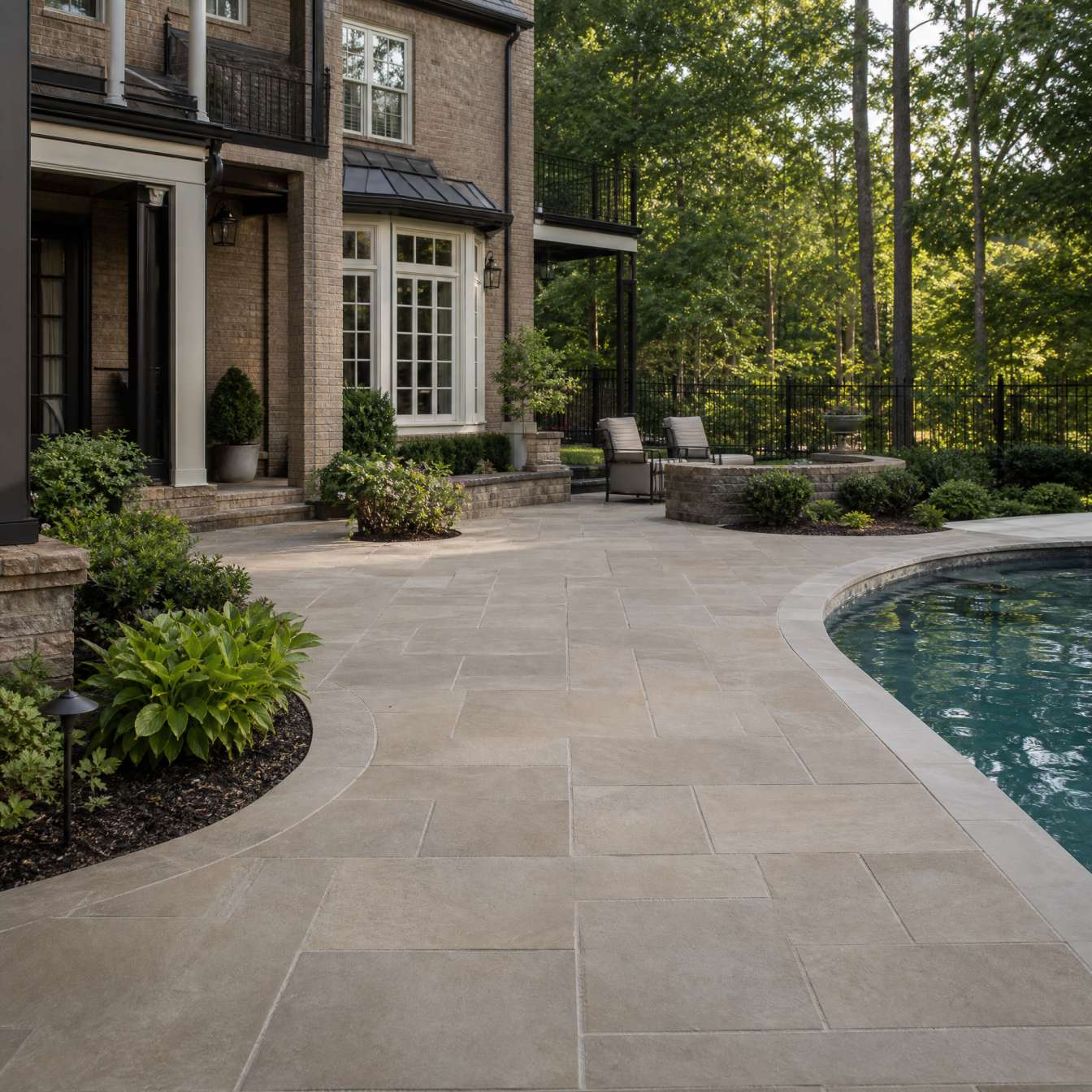
There isn't one material that's correct for every property. The right choice depends on wall height, soil conditions, budget and how the wall should look next to your home. We'll walk through these factors before recommending a direction.
 01
01Paver and Segmental Block Walls
Built from interlocking units, these offer flexibility in height, curves and layout. Individual sections can often be adjusted or repaired without rebuilding the whole wall, and finishes can be matched to a nearby patio or walkway.
02Natural Stone Walls
A more organic, traditional appearance that suits landscapes where a natural look is the goal. Stone generally requires more careful fitting during installation, which can affect timeline and cost.
 03
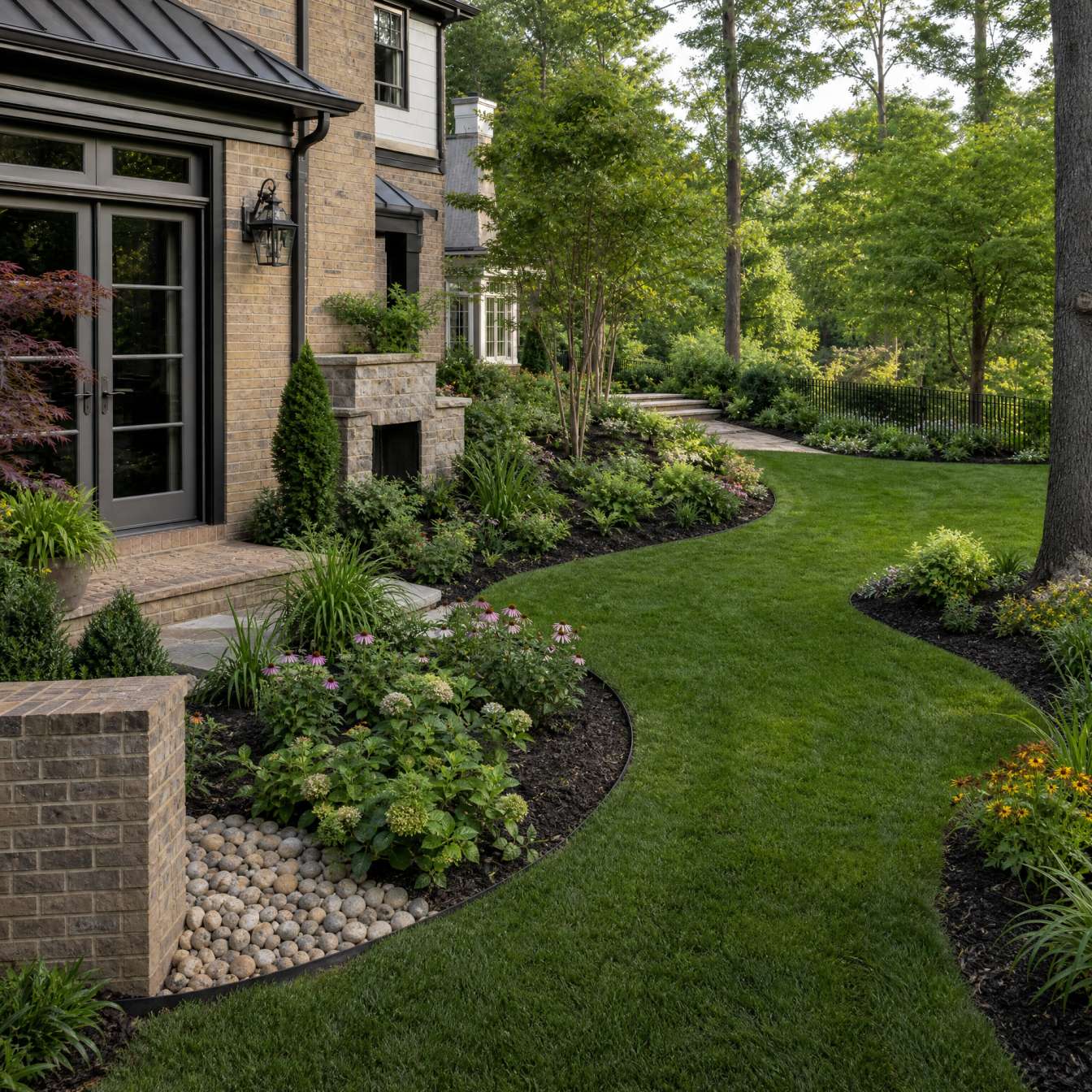
03Decorative and Landscape Walls
Shorter walls used for garden beds or minor grade changes, where appearance and layout flexibility matter more than holding back significant soil pressure.
Why Drainage Matters Behind a Retaining Wall
Drainage is one of the most important parts of a retaining wall project, and one of the easiest to overlook because problems don't always show up right away.
Soil holds water, and water adds weight and pressure. When water builds up behind a wall with nowhere to go, that pressure works against the structure over time, which is why drainage is planned before the wall goes in, not after. This generally involves giving water behind the wall a path to move through, using backfill that drains rather than traps water, and grading the surrounding area so surface water doesn't pool against the wall.
We don't provide exact pipe sizes or engineering specifications here, since those depend on the wall's height, length and site conditions and are worked out during a site assessment. What matters for homeowners to understand is that a wall built without proper drainage is more likely to develop problems later, even if it looks fine on installation day.
What Is Involved in Retaining Wall Installation?
The visible wall is only part of the project. What happens beneath and behind it — the excavation, base and drainage — has more influence on how the wall performs over time than the finish coat homeowners tend to focus on.
- Project discussion — You describe the problem and what you'd like the finished area to look like.
- Site assessment — We look at slope, soil, drainage patterns and access to the work area.
- Layout and design — Wall height, shape and length are mapped out based on the site.
- Material selection — You choose a wall style based on appearance, budget and site requirements.
- Site preparation and excavation — The area is cleared and excavated to the depth the design requires.
- Base preparation — A compacted base supports the wall and resists shifting.
- Grading and drainage planning — Drainage behind and around the wall is addressed as part of the build.
- Wall installation — The wall is built in courses, with attention to alignment and level.
- Finishing — Backfill, grading and any steps or planting areas are completed around the finished wall.
- Final walkthrough — We review the finished project with you.
How Much Does a Retaining Wall Cost in Charlotte?
There's no fixed price that applies across every project, since cost depends on the specifics of your site. Two projects of similar length can cost very differently depending on height, soil conditions and site access. The most accurate way to understand your project's cost is to have us walk the site with you.
- Wall length and height
- Material selected
- Site access for equipment and material delivery
- Excavation requirements and soil conditions
- Whether an existing wall needs to be removed first
- Grading and drainage needs
- Design complexity, including curves, corners or steps
When Should You Replace a Retaining Wall?
Some signs suggest an existing wall may need to be rebuilt rather than repaired. These signs point to a problem but don't identify the cause on their own. A professional assessment is the only reliable way to know whether a wall needs full replacement, partial rebuilding or a smaller fix.
- Noticeable leaning or tilting
- Bulging in one or more sections
- Recurring drainage or water pooling nearby
- Soil movement or settling behind or in front of the wall
- Sections that have cracked, shifted or failed
Planning a Retaining Wall in Charlotte, NC
Charlotte's mix of clay-heavy soil, hilly terrain in many neighborhoods and seasonal heavy rainfall makes drainage and soil behavior especially important for retaining wall projects here. A wall built without accounting for how water moves across a specific lot is more likely to run into problems down the line.
Older neighborhoods often have mature trees with root systems that affect excavation, while newer developments may have tighter equipment access on more compact lots.
Why Choose Empresa Galdamez for Retaining Walls?
Local Charlotte service
Familiar with the soil and slope conditions common across the area.
Personalized project planning
Built around your specific slope and goals rather than a standard wall design.
Material guidance
Helping you weigh paver, block and stone options against your budget and site.
Attention to site preparation and drainage
These determine how the wall performs long after installation.
Structural work paired with the rest of your outdoor space
A retaining wall can be planned alongside steps, a patio or a walkway as one project.
Our Retaining Wall Process
From the first conversation to the final walkthrough, we keep retaining wall projects clear, organized, and built to last.
Discuss Your Project
Share the slope, soil concerns, and the outdoor space you're trying to create.
Site Assessment
We review slope, soil, drainage patterns, and access to the work area.
Clear Estimate
Receive a straightforward estimate based on wall size, material, and site preparation needs.
Professional Installation
Excavation, base work, drainage, and wall construction handled with lasting performance in mind.
Final Walkthrough
We review the finished wall and surrounding work with you before wrapping up.
Ready to start step one?
Serving Charlotte & Surrounding Communities
Serving a 60-mile radius from Charlotte to make travel and material logistics easier. If you are nearby but outside these communities, contact us with your project location.
View all service areas
Retaining Wall Questions, Answered
Common questions about retaining wall installation, drainage, materials, timelines, and replacement in Charlotte.

Ready to Plan Your Retaining Wall?
Tell us about your slope, your soil, or the outdoor space you're trying to create, and let's talk through the right retaining wall solution for your property.
Call Us
000-000-0000